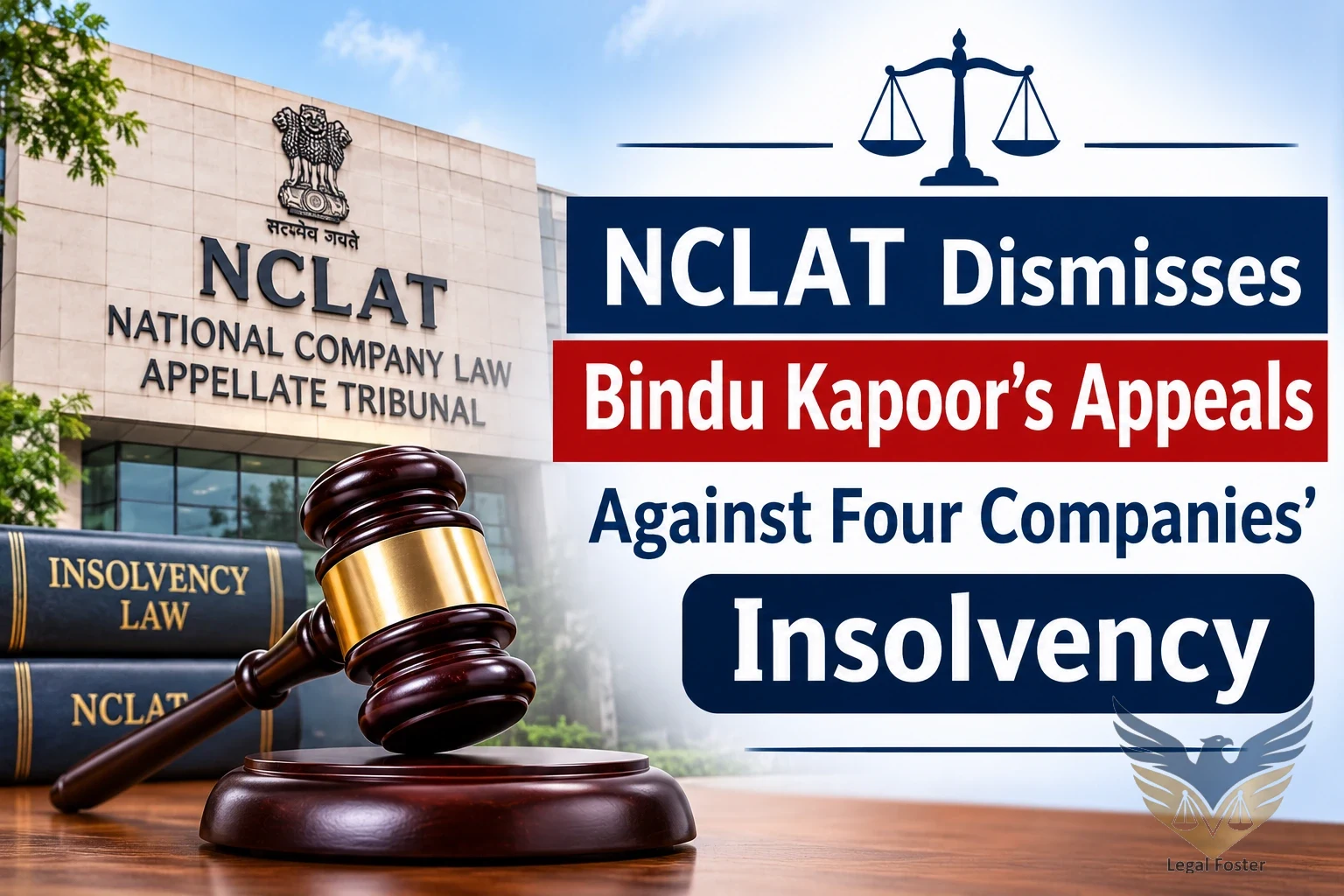
NCLAT Dismisses Rana Kapoor’s Wife’s Appeals Challenging Insolvency Proceedings Against Four Companies
Trending Desk. National Company Law Appellate Tribunal (NCLAT) on Tuesday dismissed four appeals by wife of Yes Bank co-founder Rana Kapoor Bindu Kapoor against order initiating insolvency against four companies of which she was director until her suspension last year.
The bench of Officiating Chairperson Justice Yogesh Khanna and Technical Members Barun Mitra and Ajai Das Mehrotra affirmed the April 7 order of National Company Law Tribunal (NCLT), New Delhi admitting insolvency pleas against Imagine Estate Private Limited, Imagine Home Private Limited, Imagine Residence Private Limited and Imagine Habitat Private Limited.
“The impugned order suffers from no illegality and thus all above appeals are dismissed,” the NCLAT said in its November 6 order.
JC Flowers Asset Reconstruction Private Limited had filed the insolvency petitions after acquiring lender’s rights under the loan and security agreements.
Issue was whether four companies merely provided assets against loan of ₹105 crore taken by Bliss House Private Limited as security or had also agreed to act as corporate guarantors.
Stake would decide whether pleas were to be heard by NCLT at New Delhi or Mumbai, where all four firms have registered office.
Mrs Kapoor contended the four firms were only hypothecators, they did not sign corporate guarantees on behalf of the companies and petitions ought to have been filed in Mumbai.
If they were corporate guarantors, under Section 60(2) of the Insolvency and Bankruptcy Code (IBC) pleas against them should have been before the NCLT where insolvency or liquidation proceeding against principal corporate debtor was pending.
Bliss House faced insolvency proceedings before NCLT, New Delhi. Admission of its insolvency has been confirmed till Supreme Court, the NCLAT noted.
Referring to Imagine Estate alone as representative of the cases, the appellate tribunal said on review of loan agreement and hypothecation deed “commercially, documents go beyond mere providing assets as security. There are specific repayment obligations.”
Loan agreement defined hypothecators as within “obligors”, made them jointly and severally liable for dues and obligated them to repay entire shortfall from any resource, the tribunal observed.
“Corporate Debtor’s liability is therefore not limited to hypothecated assets. Clause 2.2.4 obliges the Obligors to make good any shortfall from any source,” it said thus.
Relying on Supreme Court ruling in China Development Bank v. Doha Bank QPSC , it said “the substance of the contract matters and cannot be lost just because of the nomenclature adopted”.
Appeal that failure of signatory of principal borrower on hypothecation deed negates guarantee was also rejected.
“A contract of guarantee can be created across multiple agreements, provided the clear intention to become guarantor can be culled out. That is not something strange in law,” the bench added.
Loan agreement and hypothecation deed when read together show a “collateral contract between borrower, creditor and surety,” it held.
The tribunal added Kapoor executed loan agreement on behalf of Bliss House and also hypothecation deed on behalf of corporate debtor.
“As a common director of both Imagine Enterprises who held directorship under RAB Enterprises, Appellant cannot make such submissions,” it said.
Having ruled companies were corporate guarantors, NCLAT said pleas against them were maintainable before NCLT's bench at New Delhi.
Bindu Kapoor was represented by Senior Advocate Krishnendu Datta and advocates Abhay Chattopadhyay, Udipto Koushik Sarmah, Kumar Shubham and Harsh Gurbani.
JC Flowers was represented by Senior Advocate Abhijeet Sinha and advocates Ritesh Kumar, Sidhant Kumar Marwah, Jasmeet Singh, Shivam Sharan, Pushpendra Kumar, Naman Gowda, Siddhant Ahirwal, Lahar Jain and Ekssha Kashyap.
Advocates Sandeep Bajaj, Aakanksha Nehra, Shubham Jaiswal and Sanya Mann appeared for insolvency professional Mamta Binani who also appeared in person.