What Legal Remedies Are Available Against Fraudulent Directors of Private Companies?
Understanding corporate, civil and legal remedies available against fraudulent conduct by directors.
Trust is the foundation of every private limited company. Directors, shareholders, investors, employees and business associates trust a company when they decide to become a part of the company. When a director bleeds the company dry by withholding information, cooking the books of accounts and acting in his personal interest, the damage done to the employees, creditors, investors and reputation of the company can be far worse than just financial loss.
Shareholders and business associates are often shocked when they discover dubious transactions or activities. They don’t know how to react or where to go as they aren’t sure if the matter is strictly a business dispute or if it constitutes fraud. Fraud may also involve civil liability as well as criminal liability depending on the facts involved, evidence and intent.
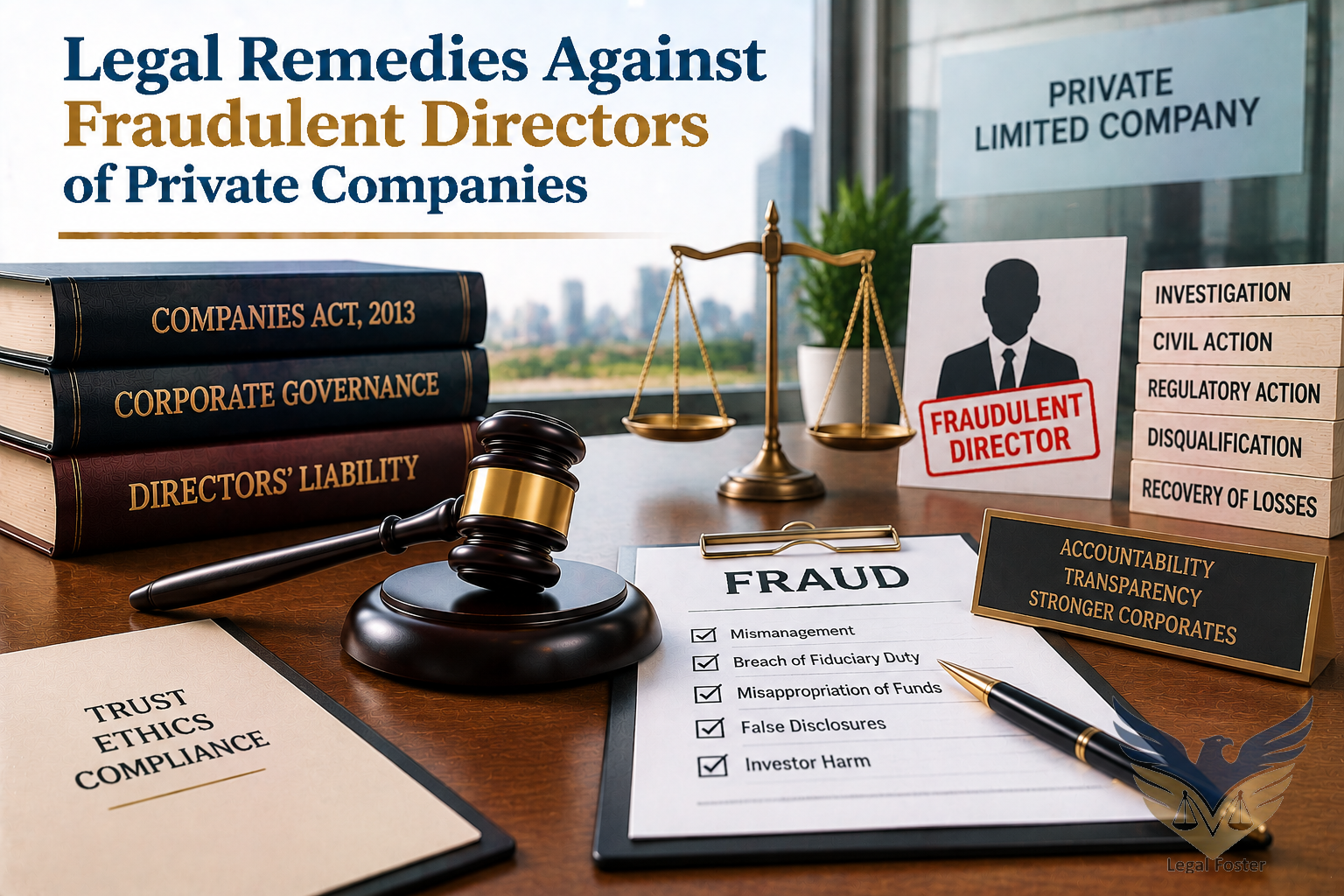
Civil remedies available in cases of fraud by directors in private limited companies include remedies under the Companies Act, 2013, civil recovery of property, criminal complaints, prosecution, action from regulators and any other remedy which may be just and equitable in the given situation. The type of fraud committed, the role of the fraudulent director, amount of financial damage done, evidence and the facts and circumstances of the company will play a key role in what remedies are available.
BK Singh Advocate will help you and your company determine all legal remedies available to you in case of fraud committed by directors. The books of accounts of the company, financial transactions along with underlying agreements and correspondences need to be carefully analysed before deciding upon what legal course should be taken.
Why Do Director Fraud Issues Become Serious for Private Companies?
Directors hold a position of trust as they manage the affairs of the company and are involved in important decision making. It is expected that a director will act bona fide and for the benefit of the company. When this trust is violated, resulting corporate litigation can be serious.
Some common examples of alleged fraud by directors are:
- Diversion of company funds/assets
- Unauthorized transaction for personal benefit
- False entries/accounting records
- Diversion of business opportunity
- Dealing at unfair terms with related parties
- Misuse of private/confidential information of the company
- Concealing material information from the shareholders
Small private companies, particularly SMEs are vulnerable as the management is often controlled by a few individuals. Any conflict between directors can have immediate impact on the operations of the business, employee relations and third party trade relationships.
BK Singh Advocate advises his clients on whether the problem arises from internal management disputes, breach of duty as a director, financial fraud or misconduct that can have civil and criminal consequences.
What Is Considered Fraud by a Director in a Private Company?
Director Fraud – Can be described broadly as any fraudulent activity committed by a director. It usually involves acting dishonestly, breaching trust or power you hold, deceive or by taking advantage of the position you hold in a company. For either wrongful gain or to cause wrongful loss to the company.
Fraud clauses of the Companies Act, 2013 covers actions which are carried out by way of deceit or concealment or by abuse of position or by any other means with intent to carry out dishonestly.
Section 447 Companies Act- Punishment in case of fraud.
Every rash and careless decision taken by directors and ventures which cause loss to the company cannot be classified as fraud. Intent is an important factor that helps determine liability as well as reliance on supporting documents/facts.
If somebody takes a business decision which turns out to be bad, he may lose money, but it’s not fraud. However concealing facts, misrepresenting documents/facts and gets caught can lead to fraud. Diversion of assets falls into the same category.
Quick Facts About Director Fraud in Private Companies
- Judges owe responsibilities to both the law as well as justice.
- Fraud allegations are analyzed on a factsually determined basis. Evidence and conduct should always be taken into consideration.
- The CA also contains chapters that talk about fraud and responsibilities of the directors.
- Responsibilities of directors are addressed in section 166 of CA. According to 166, every director shall discharge his duties bona fide in the corporation's interest.
- Section 447 punishes fraud. Punishment for fraud u/s 447 of the Companies Act, 2013
- If the facts of a case warrant it, both civil and criminal remedies may be available.
- Just because a controversy exists that involves directors does not open the doors to hold them personally liable for all.
Can Directors Be Personally Liable for Company Fraud?
Unless specific exceptions apply, a company has a separate legal personality from its directors. However, this is not always the case and directors may find themselves personally liable for their own fraudulent or unlawful conduct or for breach of statutory duty.
For example Section 458 Companies Act addresses fraudulent conduct of business. Any person who is knowingly party to that conduct of business shall be personally liable.
Whether a person (director) is personally liable will be dependent on evidence of that director's participation, knowledge, intention and involvement in that misconduct.
For businesses requiring broader ongoing corporate legal support, General Counsel Services can also be relevant where legal risk, governance, contracts and disputes need continuing review.
What Civil Remedies Are Available Against Fraudulent Directors?
Civil remedies may be sought where a director’ has caused financial loss to a private company, its shareholders or other persons. Civil actions are generally concerned with making good of losses, recouping company assets, preventing further losses or misappropriation and remedies for wrongful acts against the company.
Examples of civil remedies include:
- Recovering money/assets gained from the company
- Claiming damages for loss suffered
- Misfeasance proceedings Misuse of power by those acting on the company’s behalf
- Oppression Remedy conduct that is prejudicial to shareholders
- Accounts enforcement persons responsible for causing loss to the company may be asked to account for their actions.
Essentially, a company is considered a separate legal entity in its own right. The company is separate to its shareholders and directors. As such, directors are not automatically personally liable for any losses suffered by a company.
However, if a director is personally implicated in fraud or gains an unlawful advantage from the company assets, he can be sued for his actions depending on the specific facts and available evidence. Also, the framework of the Companies Act allows for those implicated in fraud to be held personally liable.
BK Singh Advocate can help companies and shareholders understand whether a dispute with a director can be enforced through a recovery suit, a corporate remedy or some other legal recourse.
Where the dispute involves broader business transactions, governance, shareholder arrangements or commercial obligations, Corporate Commercial legal services may also be relevant.
When Should Shareholders or Companies Consult a Corporate Lawyer?
Many business people delay instructing a lawyer hoping that things will fix themselves. But you should not delay too long as this may make matters worse, particularly if company assets, accounting records or business opportunities are concerned.
Here are some reasons why you should see a company lawyer:
- A director won't give you company records
- There are suspicious or unauthorised transactions
- Company funds have been misappropriated
- Shareholders suspect they are being denied information
- Business assets are sold or transferred without approval
- You have attempted to sort the matter out amongst yourselves
- You receive legal or regulatory threats or notifications
The earlier a lawyer reviews the situation the better. Both sides will quickly know where they stand and stop things from happening that could affect any possible remedies.
For reviewing corporate records, transactions, compliance issues and potential misconduct, Audit Diligence and Compliance services can be useful where the facts require detailed corporate and compliance analysis.
How Can BK Singh Advocate Help in Director Fraud Matters?
BK Singh Advocate advises clients on disputes between directors/shareholders, business disputes and frauds committed in business transactions.
You explain your situation to us. We try to understand how your company is structured, review documents in your possession and familiarize ourselves with the allegations of fraud. We then explain to you what legal options you may have under the facts of your situation.
Business fraud by directors also involves business judgment as well as legal issues. Careful analysis of the issues is required as every corporate dispute is different and involves different facts, documents and potential remedies.
If your company is a victim of fraud related wrongdoing by directors as a shareholder or otherwise please consult BK Singh Advocate. We will advise you of your rights.
Where the dispute has developed into litigation, arbitration, mediation or another formal dispute-resolution process, Litigation and Alternative Dispute Resolution services may be considered depending on the nature of the dispute.
Frequently Asked Questions
1. Is a director liable for fraud?
Ans. Director can be held personally liable for fraud if he himself was involved in any fraud wrongful gain or wrongful loss to another person or violation of any law or other wrongdoing.
2. Does any loss caused by a director amount to fraud?
Ans. No. If a business incurs losses or a director makes a wrong business decision, it does not amount to fraud. An element of dishonesty and deception is required such as concealment of information, abuse of position, or unlawful intent.
3. What law deals with fraudulent directors?
Ans. Depending on the circumstances, the Companies Act, 2013 and other laws would apply to fraud committed by a director. Both civil and criminal liability would arise based on the facts.
4. Can shareholders take action against a fraudulent director?
Ans. Specific relief against a director would depend on the rights afforded to shareholders under the facts and circumstances of the company and the specific wrongful acts.
5. What if a director of a company steals from the company?
Ans. A company can bring legal action to recover any losses. Additionally, a company would have remedies under both corporate law and criminal law if the elements of those offences are established.
6. Can we remove a fraud director from our private limited company?
Ans. The company would have remedies to remove the director and/or pursue other remedies against the director under the relevant statutes and the companies documents.
7. What evidence would be needed to prove a director committed fraud?
Ans. Evidence such as account books, company records, emails, contracts, invoices, transactions and any other proof of fraud would be relevant.
8. How can BK Singh Advocate assist with corporate fraud?
Ans. Adv. Singh would be able to advise you on the remedies available to you, review documents and advise you on the actions you can take.
9. Are disputes with directors a criminal matter?
Ans. Matters involving director fraud can constitute criminal matters if the necessary elements of criminal offences are made out. Examples of criminal offences include cheating, criminal breach of trust, forgery and other forms of dishonesty.
10. Where can I get help for fraudulent directors?
Ans. Businesses and shareholders can speak with Adv. BK Singh for assistance with any disputes involving fraudulent directors and other commercial legal matters.
Final Thoughts
Fraudulent acts committed by directors can cost your private company millions of dollars in lost profits, reputation and livelihood. Before taking any drastic action, it is best for company owners and shareholders to review any suspicious activity and documentation. Save copies of any evidence.
BK Singh Advocate has experienced legal representation in matters involving corporation disputes, shareholder disputes and fraud. Your company can learn what rights they have, any liabilities they may face and any possible legal recourse they may have with proper legal assessment.
Every commercial litigation case is different and depends on the specific facts and evidence of each case. This article is for informational purposes only.