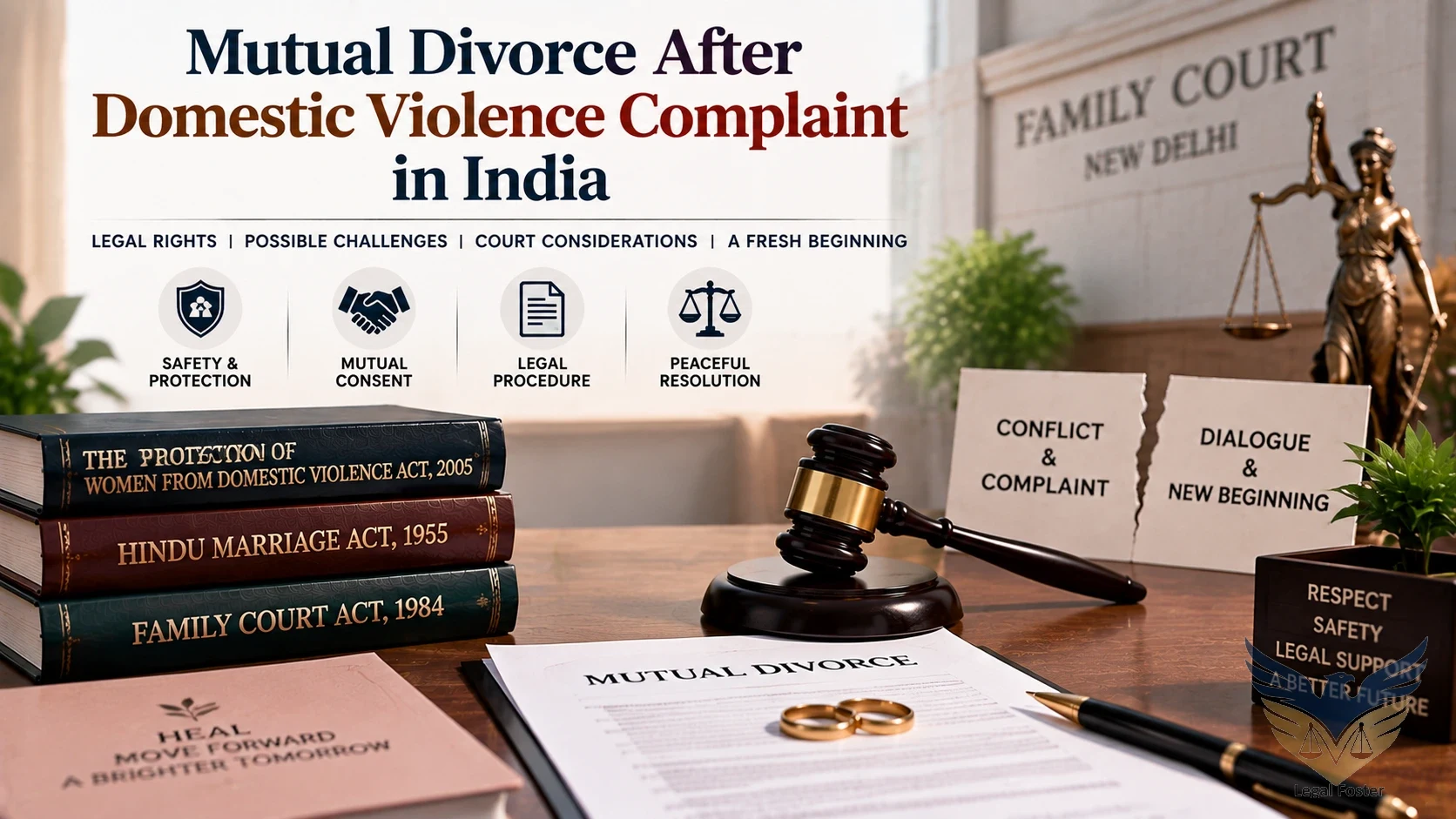
Oftentimes spouses reach a point in their marriage where they both want out. This can happen even though a domestic violence complaint, maintenance case, FIR or some other matrimonial proceeding is pending. Simply both agreeing to get divorced is no longer enough. Parties need to address each pending proceeding and each issue that they would like to settle.
Doing divorce after a domestic violence complaint is a little more complex as orders can be passed in connection with matrimonial disputes that require extra care when settling.
Mutual Divorce when there is a domestic violence proceeding
Spouses can file for mutual divorce even if there are pending proceedings under the Domestic Violence Act. Just because there are DV proceedings pending does not mean spouses are not allowed to file for a mutual divorce. Spouses can agree to settle their disputes by consent as long the terms of the settlement are voluntary, understood and sufficient to settle the matrimonial disputes related to the divorce petition.
Divorce by mutual consent is available to Hindu spouses under Section 13B of the Hindu Marriage Act, 1955. The divorce laws vary for other communities but the process is similar. Just because a domestic violence proceeding has been filed, does not mean filing for divorce and getting a decree will dispose of all pending proceedings.
In this scenario it is important to have the terms of the settlement drafted properly. If you would like someone to review your matrimonial disputes, terms of settlement and all related proceedings before you make important commitments in front of a court you can contact BK Singh Advocate.
Mutual Divorce after DV Case | Settlement Considerations
Does filing Domestic Violence complaint impact on settlement after divorce?
A Domestic Violence proceeding may deal with issues of:
- Physical abuse
- Verbal/ Emotional abuse
- Economic abuse
- Residence
- Monetary /maintenance relief
- Compensation
- Protection orders
- Any other matrimonial relief
Now let’s say the spouses have agreed to resolve their disputes amicably and settle things out of court after initiating a DV proceeding. How do parties handle things like maintenance, permanent alimony, return of jewellery / belongings, custody, pending proceedings, financial obligations etc.? Both parties don’t want to leave any issues unresolved but are unclear as to the specifics.
If the obligations aren’t clearly defined, a DV settlement drafted in haste may leave you with another dispute on your hands once you thought the matter was finally resolved.
How to settle divorce after DV case
For this reason, settlement terms of divorce after filing of a domestic violence complaint should specifically state which proceeding is being settled and what obligations are being undertaken. It would be wise to have BK Singh Advocate review that the terms one is agreeing to are actually reflected in the pending cases of both the spouses.
Need legal advice related to settlement after Divorce DV complaint?
- A pending domestic complaint cannot stop spouses from filing a mutual divorce petition.
- Divorce filing and Domestic Complaint are separate issues.
- Settlement agreement has to be with free consent of parties & with knowledge.
- Settlement terms must specifically mention maintenance, permanent alimony, child issues, restraining orders and return of belongings if they exist in your case.
- The parties need to understand that just because they get a divorce decree, does not mean that all separate complaints/ proceedings get dismissed.
- Criminal Proceedings can be withdrawn / compounded with a separate court process (if necessary).
- There could be multiple proceedings pending, so terms of settlement should specifically mention timelines for payment (if any), pending proceedings and responsibilities.
What should my divorce settlement include?
Drafting a divorce settlement agreement is about more than specifying a lump sum amount of money to pay or receive. Care should be taken to identify each case number and petition associated with your matrimonial disputes.
The agreement should clearly identify how much (if any) permanent alimony or maintenance will be paid, the amount paid and when payments are due. If certain amounts are paid upon signing the first motion, second motion or other pending petition, the language should be as clear as possible to eliminate doubt.
Return of jewellery, identification of stridhan, return of identity documents and household goods may all need to be spelled out. Phrases like “all disputes” are resolved aren’t always enough if one party still has the other spouse’s valuable assets.
If you have children involved in your divorce, child custody, visitation, payment of education costs or medical bills and other details will need to be decided. Keep in mind that even if both parents reach a settlement, the court will base its decisions on what it deems is in the child’s best interests. Agreements dealing with children should be drafted in a way that leaves little room for interpretation.
If possible, your divorce settlement agreement after DV complaint should list the specific case numbers and the courts or tribunals where the cases are pending.
Consult with BK Singh Advocate for a settlement agreement review if you have multiple matrimonial cases pending.
Does divorce after filing DV case automatically close my Domestic Violence case?
No. The DV proceeding and the petition for divorce are separate proceedings.
If parties have reached a settlement of the pending DV case out of court, the parties’ settlement document should specifically mention what parties have agreed to and how the proceeding will be disposed off/legally settled according to law. Parties entering into a settlement should not think that they can simply file for mutual consent divorce and every pending case will go away with it.
This is especially true if there is an FIR/criminal proceeding pending against either party in connection with the matrimonial dispute. Withdrawal/compounding/quashing of criminal proceedings depends on what proceeding was initiated and what laws govern that proceeding.
BK Singh Advocate can review your settlement terms to ensure that your divorce petition is not viewed in isolation. If you have multiple matrimonial proceedings pending in various forums/courts, you should speak with a lawyer about how your settlement will impact each proceeding.
What law applies to filing divorce after a DV case?
The Protection of Women from Domestic Violence Act, 2005 provides the following reliefs to an aggrieved woman in a domestic relationship. These reliefs are protection orders, residence orders, monetary reliefs, custody orders and compensation or damages depending on the facts of the case and the reliefs sought by the aggrieved woman.
Divorce by mutual consent is dealt with under Section 13B of Hindu Marriage Act, 1955. Certain conditions/requisites have to be satisfied under the law before a court grants Hindus divorce by mutual consent.
Divorce laws for other communities are sometimes different. Under Hindu Law for instance the parties have to demonstrate that they have mutually agreed to live apart and consent to a divorce by filing a joint petition.
Maintenance could be claimed under matrimonial laws, under the DV Act or under some other law depending on the matrix of facts of the cases pending between the parties.
Keep in mind that an FIR, criminal proceeding or abuse complaint being withdrawn is not done the same way a DV matter or divorce is disposed of. BK Singh Advocate can explain these differences to you before you sign your settlement agreement or make any statement on record in court.
What documents should I review before agreeing to settle my divorce?
Before agreeing to a mutual divorce settlement, every couple should understand at least some of their pending litigation and monetary disagreements. Here are some documents that may assist you in analyzing your marital dispute:
- Marriage certificate or evidence of marriage
- Valid ID/addr proof of both parties
- DV Complaint
- Orders passed in DV case (If Available)
- Maintenance petition/complaint and orders
- FIR/police complaint (If Available)
- Pending divorce/matrimonial petitions
- Copies of mediation (If any)
- Income documents of husband/wife (If financial disputes are filed)
- Documents relating to children (If any)
Bank statements evidencing prior transfers can become useful if there are monetary claims. Jewelry lists, or stridhan can help you keep track of any remaining assets.
Again, you will not need each of these documents for every issue. Consult a lawyer who can identify if your final divorce decree is missing any pending lawsuits or obligations. BK Singh Advocate will review your paperwork before you sign any final written settlement.
Can maintenance and alimony be agreed upon after domestic violence?
Yes. Financial matters can be one of the most complex sections of any divorce settlement.
Parties are free to make agreements on any issues relating to maintenance, lump sum permanent alimony and every other monetary claim recognized by law. If you and your spouse have agreed on a settlement amount, make sure your written settlement agreement identifies whether that amount is a lump-sum, full and final settlement of the above mentioned matrimonial claims.
Specify payment terms clearly. Include due dates and payment stages. Beware of the language used to draft payment stages. An ambiguous payment clause may leave one spouse responsible for performing his or her major duty prior to that spouse’ corresponding payment stage.
Seeking divorce after DV case?
You do not have to understand India’ family laws or agree to a divorce settlement without experienced advice. BK Singh Advocate provides residents in Delhi, New Delhi, Noida, Greater Noida, Ghaziabad, Gurugram and Faridabad the opportunity to have their marital disputes reviewed, options presented and to be represented during every stage of proceedings in India’ family courts.
Financial disclosure and decisions vary greatly on the circumstances involved. Contact BK Singh Advocate today if you would like some help ensuring the terms of your settlement agreement are worded in a way that correctly outlines your negotiated agreement and avoids ambiguity in the future.
What happens to child custody after divorce?
When parents are able to put their differences aside and focus on what is best for their children they can often agree on terms that work for everyone. Custody agreements, visitation schedules and financial terms can be memorialized in a court order or legal agreement.
Ideally the parenting agreement will address who has physical day-to-day custody of the children. The agreement should specify who will be responsible for picking children up from school or college. Parents should specify how visitation/contact will work and who will be responsible for paying for children’s education, healthcare and other needs. Parents should decide what will happen if one spouse remarries and needs to take the children on vacation during school holidays.
One tip for parents. Try to not use any phrases in your parenting agreement that may lead to conflict in the future. However, it is also wise to never include a statement that the court will never modify your agreement no matter what, if something happens to your child’s wellbeing.
Children are ALWAYS included in settlements that are reached after a DV case is filed.
BK Singh Advocate can review divorce settlement agreements before going in front of family court. Questions on Child Custody Laws in India can be asked if you are looking to learn how Indian courts view custody.
Why does timing become important with divorce settlements?
Timing is critical because divorce agreements often involve multiple interconnected obligations.
For instance:
- One spouse may need to pay, return property or help with a pending proceeding.
- Another spouse may need to file for divorce, provide information at mediation or take agreed upon action with respect to another pending proceeding.
If these actions aren't carefully orchestrated with timing aligned to the actual legal posture of each pending issue you run the risk of one party doing his or her part of the agreement and the other party backing out of the deal.
Prior to sending any money, forfeiting claims or making sworn statements in Court have your settlement agreement reviewed by an attorney.
Terms of any divorce agreement should be timed with the actual posture of each pending proceeding.
BK Singh Advocate can review your settlement agreement prior to parties taking irreversible actions.
When should I contact a lawyer about divorce after DV case?
You may contact a lawyer any time you want legal advice. Consulting a lawyer becomes especially important if:
- A DV complaint is pending along with maintenance litigation, an FIR, child custody proceeding or some other matrimonial case.
- Your settlement includes hefty permanent alimony payments, arrangements over shared property, return of jewellery, staged payments, withdrawal and disposal of pending proceedings or child custody terms.
Entering into a settlement and correcting the terms afterwards can be far more troublesome than hiring a lawyer at the outset.
Residents in Delhi NCR with matrimonial disputes
Spouses residing in Delhi NCR who need help understanding the legal effect of divorce settlement terms can contact BK Singh Advocate to learn how your decisions may affect several pending proceedings.
Divorce lawyer Delhi NCR to help with your case?
Signing a divorce settlement you later regret once you’ve spoken to a lawyer is one of the last things you should do.
A lawyer from Divorce lawyer Delhi NCR can go over your matrimonial disputes, terms you’ve agreed upon for settlement and offer suggestions for filing a divorce by mutual consent. We will go over each proceeding related to your matrimonial disputes so we can figure out what else needs to be settled before your divorce can be finalized.
An attorney wants you to settle but will not force you to sign an agreement. Individuals should seek legal counsel before signing a divorce. Only when both parties willingly agree to the terms and understand what they’re signing will a voluntary and workable settlement be reached.
BK Singh Advocate can review your paperwork if you have ongoing domestic violence cases, maintenance requests, custody battles, divorce agreements and every other type of matrimonial dispute filed in India’s family courts. Have a lawyer explain how one proceeding can impact the other.
This depends on your specific case, the laws that apply to your marriage and any previous rulings the court has already made regarding your disputes.
Divorce FAQs
Q1. Can I file for divorce after filing a complaint of domestic violence?
Ans. You can still file for mutual consent divorce after filing a complaint of domestic violence. Keep in mind the DV proceeding will have to be resolved independent of the divorce proceeding according to law. Talk to BK Singh Advocate divorce lawyer who can go over your separation terms and highlight how this proceeding should be handled.
Q2. Does my divorce case terminate the DV complaint?
Ans. Filing for divorce does not terminate your DV complaint. Cases involving divorce and domestic violence are handled independently of each other according to Indian law. Speak to an advocate who can explain to you how you should handle your DV case in your mutual divorce settlement.
Q3. Can I settle my domestic violence complaint with my husband?
Ans. Any dispute between spouses including those subject to DV proceedings can be settled without Court intervention if parties come to an amicable agreement. Upon reaching a settlement the DV case will be disposed off as per law. Feel free to reach out to BK Singh Advocate if you would like assistance in understanding how a pending DV case should be resolved.
Q4. After divorce, is husband supposed to give money to wife?
Ans. Spouses can negotiate if maintenance or permanent alimony will be paid and how much amounts will be paid. There is no cookie cutter formula that can be applied to every divorce after a DV case.
Contact a divorce lawyer like BK Singh Advocate to understand how stages of payments should be setup. Agreements should be written in plain English and specify what payments correspond to which agreed upon legal stage.
Q5. What if there is FIR against my husband?
Ans. Just as with domestic violence proceeding, any criminal case must be looked at independently. You should speak to a lawyer if your husband has pending an FIR or criminal case pending against him.
A mutual consent divorce will not automatically dispose of any criminal case pending against your spouse. The right legal avenue for you to pursue will depend on the allegations made in the FIR or criminal case, where the case is currently at, and other relevant laws.
Q6. Can we talk about child custody in mutual consent divorce?
Ans. Yes. You and your spouse can record your agreed terms on how you want to handle child custody, visitation rights and child support in your mutual consent divorce settlement.
Remember family courts in India place child custody and visitation matters above the desires of parents. Contact a lawyer if you would like assistance with understanding how Indian child custody laws apply to you.
Q7. Should I list jewelry and stridhan in divorce settlement?
Ans. Anything outstanding whether property, belongings or relief due to you in the marriage should be listed in your terms of settlement. Special care should be made to identify jewelry, stridhan, or other valuable items belonging to you but was taken by your husband and not returned.
Contact BK Singh Advocate to eliminate any confusion within your divorce settlement terms.
Q8. Can my husband retract from a mutual agreed settlement?
Ans. Since divorce by mutual consent is decided by mutual consent at every stage, if your husband has changed his mind about the agreement you entered you can always speak to an advocate to find out how you can hold your husband to the terms of the agreement.
Whether or not family agreements are binding depends on the facts and wording of the agreement. Please contact BK Singh Advocate to find out more.
Q9. Will I benefit from mediation with DV case pending against my husband?
Ans. Yes you can benefit from mediation. Mediation is a process where you and your husband can negotiate all your differences with the help of a family mediator. Both spouses must be willing to settle their differences in order to participate in mediation. Any agreement or promise made during mediation should be made voluntarily and with a knowledgeable understanding of your legal rights.
Contact BK Singh Advocate to learn more about family mediation in India.
Q10. Should I meet a lawyer after filing DV case but before filing for mutual divorce?
Ans. Absolutely. When there are multiple matrimonial disputes between a husband and wife you should understand how all these connected matters work. Divorce attorney BK Singh Advocate can go over these connected matrimonial proceedings like maintenance, criminal proceedings, child custody hearings, return of property, and settlement payments so you know exactly what your terms of settlement will and will not cover and what other separate legal proceedings you may need to consider.
Conclusion
Seeking divorce after filing DV cases with husband/wife: Before you and your spouse file a joint divorce petition, seek more information. Domestic violence complaints, maintenance petitions, criminal prosecutions, money settlement agreements, custody petitions, and claims for return of stridhan/jewellery are all separate family law issues that carry ramifications you might not have thought about.
Ensure your settlement clearly identifies all pending proceedings, documents obligations in as much detail as possible and never assume signing one piece of paper will automatically end your cases with the court.
Contact BK Singh Advocate before you make any significant payments or sign your final divorce agreement to see how your terms align with every pending proceeding.