Illegal Construction by Neighbor – Unauthorized Building over Property Lines?
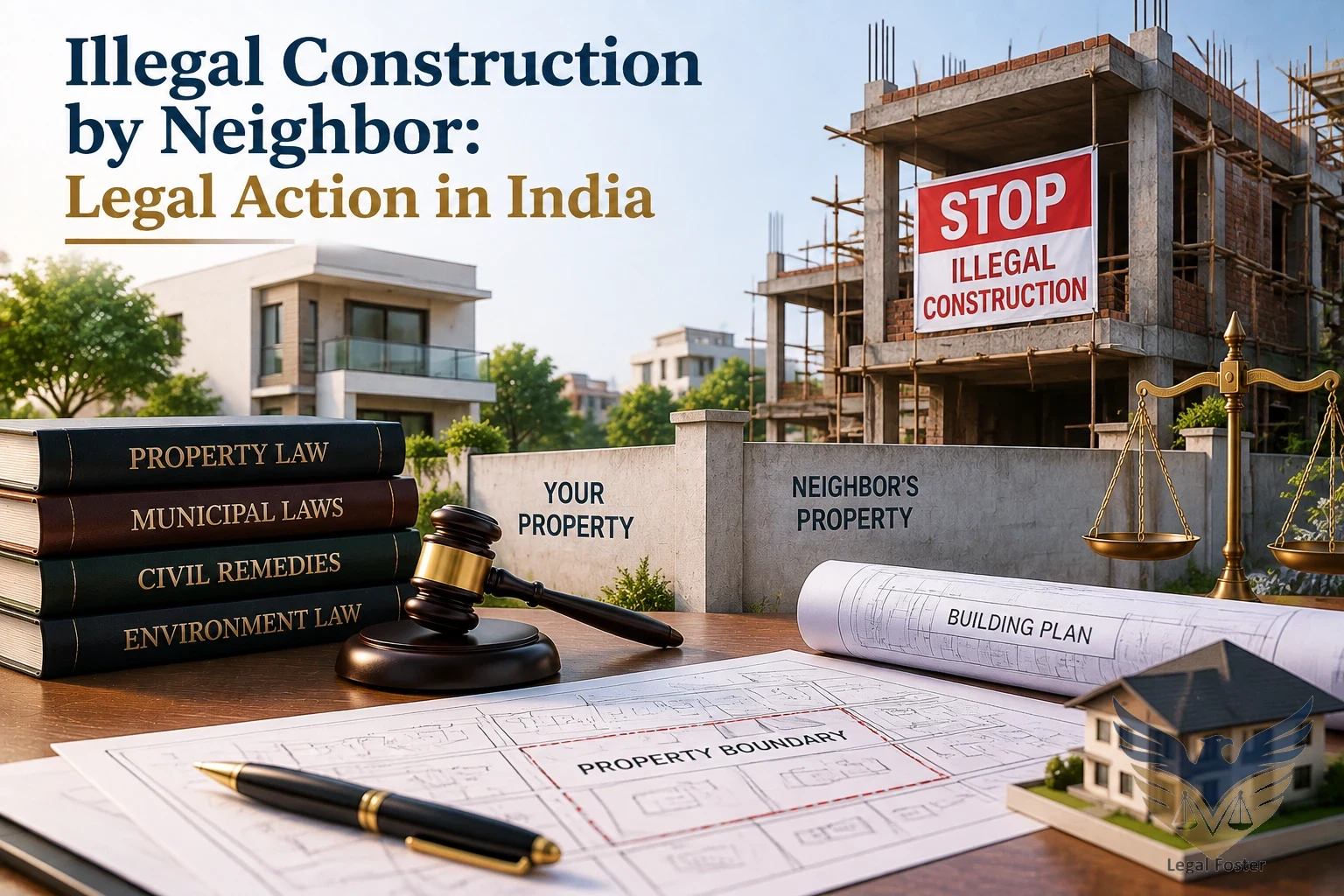
You return home from work to find your neighbor has expanded into your setback, added another floor, blocked a common walkway, or started construction on land you thought was yours.
Illegal construction is more than concrete, brick and mortar to a property owner. Municipal takings can impact title, access, safety, value and future litigation. Taking quick and effective action is essential. Delaying too long can also forfeit rights to preserve the dispute in writing.
The mistake many property owners make is treating all illegal construction like criminal matter. While that may be appropriate in certain circumstances, oftentimes the first question you will want to ask is: What permission should have been obtained? What was actually approved? Where has the building taken place? What municipal body or planning agency has jurisdiction?
Illegal or unauthorized construction could mean many things. It generally refers to construction that was done without receiving a necessary permission or contrary to terms on which building was allowed. This can include building outside of what was approved on a building plan, in violation of building codes or law, encroaching on another’s property or rights, violating land-use restrictions or otherwise against the municipal or planning ordinance.
If your neighbor built onto your land, additional private law remedies could apply under civil law. Specific facts and circumstances will determine your legal rights against the neighbor and any government authority.
A common approach Advocate BK Singh will take is to first separate the ownership issue from the building regulation issue. Just because you own land does not mean you can avoid getting permission from your municipal agency to build. However, something that is built in violation of those regulations does not necessarily resolve a separate civil dispute regarding ownership of the land. If someone builds onto your land without your permission, that does not necessarily make the building itself illegal.
Why Illegal Construction Matter in Delhi NCR or India in 2026?
Aside from the mechanics of building walls and foundation, illegal building can affect rights and property ownership. Your neighbor’s addition to their home may affect your easement or access. Your neighbor’s illegal second floor could deprive you of light and ventilation or create structural safety hazards. Construction built over the property line can create a possession/title dispute.
First determine where the land falls and what permissions should have been obtained from local authorities. You may be able to file a complaint against illegal building with your municipalities enforcement division or another specified department.
Building-Plan sanction regularisation and unauthorized construction complaints in Delhi can be filed with Municipal Corporation of Delhi(MCD). Check MCD helplines to file complaint in Delhi.
What’s illegal in Delhi may be legal in Noida, Gurgaon or some other jurisdiction. Each municipal corporation and development authority will have different laws they’ve passed under their authority. Some may allow for stronger regulatory enforcement action than others. The Government body which has jurisdiction to investigate, order sealing of buildings, prosecute and/or mandate removal will depend on the local law applicable to your property. Every city has different planning laws and building regulations. Property in Delhi will fall under MCD jurisdiction whereas property in Faridabad will fall under FHA.
The Supreme Court has stated that a Government authority must follow the procedure prescribed by law before taking any coercive action against illegal construction/encroachment.
You may file a complaint against illegal building but the government agency will have to enforce any necessary legal action. As a citizen, you can’t take the law into your own hands and try to demolish the building yourself. Avoid personal confrontations with your neighbor.
Quick Facts About Illegal Construction.
Illegal construction is building that occurs without the proper approval from a municipal or planning body.
A building plan that was approved against can be used to verify illegal construction.
Illegal construction, however, is different from a civil dispute over ownership of property. They are separate legal issues.
Municipalities have power to go onto private property to investigate, order repairs, demolition or file prosecution under the applicable laws.
Civil courts have jurisdiction to enforce private rights related to property. This includes rights to ownership, recovery of possession, injunctions and declarations.
Any documents related to your property and illegal construction will be useful. Take note of any evidence that can support your claim.
You may have numerous options depending on your facts. However, there could be procedural bars that prevent you from filing a lawsuit or complaint.
All legal actions depend on the facts, local laws, competent forum and correct procedure.
How do I know if construction is Illegal or Unauthorized?
As catchy as it sounds, illegal construction should be defined precisely. Someone could build outside what was approved on a plan, but that doesn’t necessarily mean they built on your property.
Illegal construction can be done without approval, by being contrary to an approved building plan, in violation of building codes/laws, by encroaching on another’s property or rights, by violating zoning restrictions or otherwise by being against the controlling ordinance.
Get the facts straight. Advocate BK Singh will usually try to understand the title claim, approved building plan and actual construction that occurred independent of one another before analyzing your legal options.
For matters involving ownership, possession, title conflicts and related property rights, the Property & Real Estate Law service page is relevant to this type of dispute.
What laws pertain to Illegal Construction in India?
Building laws in India can vary from state to state and municipality to municipality. For example, the building laws in Delhi will not be the exact same as the building laws that govern construction in Bangalore or Mumbai.
In Delhi, the applicable building laws can be found under the Unified Building Bye- Laws in addition to any planning measures enforced by Delhi government agencies. The official website MCD plan approval page lists the Unified Building Bye- Laws for Delhi under its “Plannings Regulations” section.
Don’t forget about civil law if the construction is related to your property boundaries or other enforceable rights. Just because your neighbor built something illegal, does not mean you are without civil recourse.
Your enjoyment of your property can be affected by illegal construction. The Courts have even recognized illegal building as a distinct category within Housing and Building laws.
Illegal building does not automatically give you a cause of action against your neighbor. For example, just because there is illegal building does not mean you have a claim for possession of the property. These issues can be separate.
Who can file a complaint against illegal construction?
That depends on who is constructing what and what rights do you have. If you believe your neighbor or builder is constructing something they aren’t permitted to build, you can file a complaint against them.
If you are a joint-owner of property with your spouse, you both may have rights to enforce under the property titles. If someone is affecting your right to quiet enjoyment of your property with illegal construction, you may be able to file a complaint against them with the local municipal agency.
The builder constructing your home could open another can of worms with respect to your purchase agreement, title to property and breach of statutory regulations.
Commercial property brings up other concerns regarding unauthorized usage of the property (commercial vs. residential), fire safety regulations, capacity restrictions, unlawful structure and other potential authorized permissions.
Advocate BK Singh will go over the facts with you to determine if you have a municipal-code violation, civil matter or both.
Where the dispute involves civil rights such as possession, injunctions, declarations or other private property remedies, the Civil, Criminal & Family Law service page provides further context.
What Legal Action Can You Take Against Illegal Construction?
-
File a Complaint
If the building is completely unauthorized, you could consider filing a written complaint with your local municipal or planning agency as a first step.
Your complaint should include the property in question with the reason you believe the building is illegal. You can attach any supporting evidence you have to your complaint. Include pictures of the building that was constructed, building plan or layout if available, property documents you have and any correspondence with the builder and/or municipal authority.
MCD provides an online complaint form for Delhi Residents to file complaints about unauthorized buildings and structures.
Filing a complaint with your municipality will not automatically guarantee the building will be demolished. If found to be illegal by the authority, they will have to investigate and take action according to the procedures prescribed by law.
-
Civil Action
If you own property and your property rights are affected by the illegal construction, you may be able to assert a civil claim against your neighbor.
This could include filing a civil lawsuit asking the court to declare your rights, grant you an injunction against the builder or owner next door, recover possession of property (if unlawful possession is at issue) or some other remedy available by law.
Your case is not cut and dry just because there is illegal construction next door. Contact a lawyer to discuss what rights you wish to enforce or protect. There may be civil remedies available to you.
If you need to stop construction from continuing, you may be able to file for temporary relief. Illegal construction can happen fast. Once a building is completed, other disputes could arise.
Where you believe immediate and irreparable injury will occur without the intervention of the court, you can file an application to the court and request temporary relief until a decision is made in the case.
The court will review your pleadings, the evidence and legal arguments before making a determination.
Advocate BK Singh can help you review the situation and identify if immediate legal action is recommended or if you have time to wait until construction is finished.
Where a dispute requires a higher court or tribunal forum, the Supreme Court, High Court & Tribunals service page covers higher-forum legal representation and related remedies.
-
Legal Remedies If Nothing Happens.
If the government authority does absolutely nothing about your complaint, you might have to file a separate lawsuit in court. The remedies available to you will depend on what (if any) action the authority took.
One legal route you can take is known as Judicial Review. The forums and relief available will be determined based on your unique facts. There are options available to you if the municipality does nothing.
Just because you can file a lawsuit against the government agency does not mean you should skip filing a complaint with them. You should not view filing a lawsuit in Civil Court as a substitute to filing a complaint with your municipality every time.
Evidence you should preserve
Be sure to save any evidence that will support your claim. There are many different documents you should keep safe. Some will be required to prove ownership of your property. Others can help prove the building was illegal.
- Title deed/conveyance deed/allotment letter
- Mutation/property card (if applicable)
- Approved building plan
- Site plan/ layout plan of property
- Legible property marking/ identification details of the property
- Photographs and Videos of alleged illegal construction
- Any correspondence with municipal authority/development agency
- Copies of previous complaints made to the authority + acknowledgement
- Any notices you received from municipal authority/devisional authority
- Agreement you have with builder or contractor (if applicable)
- Property survey and measurements (if applicable)
General Legal Process for Illegal Building
Each legal matter does not have to be done from ground zero. A general legal process would start with understanding the allegations and reviewing your property documents.
Step 2 would be to gather any evidence you have and determine where to file a complaint against illegal construction. Oftentimes, complaints are made with the municipality/planning department and a separate civil lawsuit is filed for violations of private property rights.
If a lawsuit is already pending in court against you or the other party has filed a lawsuit, your legal approach would be different. Received notices, inspection reports, demolition/scaling orders and prior court orders should be reviewed carefully.
BK Singh can go over the information you have and discuss the general legal process, potential forums you may have to file a complaint in and what documents will be required to take legal action. We do not take a generic approach to each construction related dispute.
When to Consult a Lawyer for Illegal Construction?
Consult a lawyer if your property boundary has been violated by construction, if a second floor is being constructed without permission, if the building exceeds what was approved on the building plan, if you’ve received a Notice or if complaints to the authority have gone unanswered.
You should also speak with a lawyer before purchasing a property that may have pending disputes or if you know/uncover unauthorized construction.
If you’ve received any kind of Notice from your municipal corporation/development authority, consult a lawyer immediately. Some Notices can become barred if not responded to in a specified timeframe.
Advocate BK Singh will try to understand the nature of your illegal construction problem and go over various legal remedies, documents you should collect and where you should file your complaint.
For environmental construction disputes, green-zone concerns or matters involving environmental authorities, the Environmental & NGT Matters service page is also relevant.
How can Advocate BK Singh help in an illegal building dispute?
BK Singh helps property owners understand their legal rights when there are disputes regarding illegal construction in neighbors yards, violation of property rights, civic complaints, municipal takings, and associated civil remedies.
The initial consultation will include discussing what property documents you have, approved plan of the property( if any), relevant photographs, notices you’ve received, correspondence with other parties and the specific details of the construction violations.
Your matter will be discussed and you can decide how you would like to proceed. Advocat BK Singh will then proceed with contacting the appropriate authority or court on your behalf.
Lawyer BK Singh does not guarantee specific results, but will provide competent legal advice based on your particular situation and documents.
Clients in Delhi NCR, Ghaziabad, Noida, Greater Noida, Gurugram, Faridabad, Meerut, Hapur, Lucknow, Kanpur, Prayagraj, Varanasi, Agra, Jaipur, Ludhiana, Chandigarh or Outside Delhi India can get a legal consultation based on the subject matter and location of the dispute.
For disputes that may proceed through negotiated resolution, mediation or other alternative dispute mechanisms, you can also review the Arbitration & ADR service page.
Where the property dispute also involves business, commercial or contractual issues, the Corporate, Commercial & Taxation service page may be relevant to the associated legal issues.
FAQ’s
Q1. What does illegal construction mean?
Ans. Illegal or unauthorised construction refers to building that is done without obtaining the necessary permission from municipal planning agency or contrary to terms on which a building was allowed. Illegal building can occur when constructing outside of what was approved on a plan, in violation of building codes/laws, by encroaching on another’s property, by violating zoning restrictions or by going against the municipal or planning ordinance applicable to that land.
Q2. Can I complain about my neighbor’s construction?
Ans. If there is an actual violation of the building regulations that have been established by your municipality/planning authority, you can file a complaint against illegal construction.
Q3. Can unauthorized construction on my land be demolished by someone?
Ans. Enforcement will be dependent on local laws that have been passed by the municipal authority. You should not take the law into your own hands.
Q4. Can I apply for a court injunction against construction?
Ans. Civil court remedies are available depending on the rights you assert are being violated. Injunctions are not automatic and must be granted by the court.
Q5. Is illegal construction a criminal issue?
Ans. Municipal building violations are generally enforced by civic regulators and not by the police or criminal courts. However, if someone has actually committed a crime under the applicable statutes, there could be potential criminal liability.
Q6. What evidence should I gather to support my claim?
Ans. Title documents, photos/video of the property and construction, notices, municipal inspections records, acknowledgment of complaints, municipal/planning records and survey of property can all be useful depending on your circumstances.
Q7. The local municipal authority is not taking any action on my illegal construction complaint. What should I do?
Ans. Seek a lawyer to discuss your legal options. If your municipal body or Planning Department in India is not doing their job, there could be judicial remedies available.
Q8. Can construction be regularized if done without permission?
Ans. Depending on the laws that your municipal authority has made, they can allow for regularization. Municipalities generally have the power to make bylaws under their jurisdiction. Just because a building can be regularized does not mean your neighbor will automatically regularize the building.
Q9. Should I wait for the construction to be completed before starting legal action?
Ans. No, not necessarily. If you believe construction is ongoing that violates building regulations, contact a lawyer immediately. It may help to gather evidence such as photographs of the construction and survey of the property before the building is completed.
Q10. Can Advocate BK Singh represent me if my construction matter is outside of Delhi NCR?
Ans. Advocate BK Singh can consult with you on your legal matter. Whether we can represent you will depend on subject matter and where the property is located. Read about Civil Jurisdiction in India .
For matters involving broader sector-specific regulatory issues, the Sector-Specific Legal Solutions service page provides additional information about specialised legal matters.
Where a dispute has an employment or industrial component connected with the property or construction business, the Labour & Industrial Disputes service page may also be relevant.
For disputes involving financial or banking-related property recovery issues, the Banking Recovery & Loan Settlement service page covers the site's related banking and recovery services.
Conclusion
Illegal construction against your property can have costly and stressful consequences. If you wait too long or file a complaint in the wrong place, you may lose rights or remedies you would have otherwise had.
Start with the basics. What rights have been infringed upon by the construction? What was actually built? Where did the building take place? What approval should have been applied for? What municipal body has jurisdiction?
Documents can be your best friend when it comes to illegal construction. Take pictures. Save any complaints you’ve made in writing. Don’t take matters into your own hands. Avoid contacting your neighbor or strangers about the dispute. And finally, don’t assume just because you file a municipal complaint or civil lawsuit the courts will issue the remedy you want.