How Can a Property Dispute Lawyer Help Property Owners Resolve Legal Disputes in India?
Its could be your house. Maybe a land that has been given to you or some money which you invested in property. There are various circumstances which can cause you to spend years fighting for a property. Its could be because of some document missing. Or someone might tell you that its their property and no ones elses. Its could be you who have purchased the property and find that the documents do not match. Even a neighbour who may be constructing on your land.
Knowing what the documents say and your options if you find the right lawyer for property disputes will benefit you. In case you want to go to court right away. After the property has been transferred or sold it becomes complicated.
These are just some reasons why there are so many property disputes in India. Ownership. Inheritance, partition. Possession, sale deeds. Builder and buyer problems. Encroachment and fraud. All these cases require individual attention. You might have your name in the documents from the local municipality. But may not be the owner of the property. Some registered deed may state something that you think you're entitled to.
Advocate BK Singh can review your documents and inform you what options you have in court. And what you should do next. Don't run to court is always the first step. Know what happened to you. What documents do you have. What problem you want to fix.
Suppose there is an ancestral home owned by a family in Delhi NCR. One of the brothers is living in the whole house. He does not want to speak about partition. Another sibling may also have a claim on the property. How much they can claim will depend on many factors.
Just like how you might have purchased a flat in Noida. Have a land in Ghaziabad or have purchased commercial space. These issues can be solved in many ways. By issuing a legal notice. Speak to each other. File a partition case. Get declared as the rightful owner. Seek an injunction or take possession of the property.
So in this article we will discuss what are the different types of property disputes in India. What rules can you use? And what documents to keep. And when you should seek a lawyer.
Why Property Disputes Matter in India in 2026?
As you can see from above there are various scenarios as to how people end up in property disputes in India. Its not necessary that its about the ownership of the property. Maybe you cant sell your house or build on top of it due to a dispute. Maybe you are not able to finalize a deal over a commercial property.
Property disputes are very common in Delhi NCR. Be it between builder and buyer, dispute over ancestral houses. Fighting over Agricultural land, unauthorized construction or a simple boundary issue. Land can be disputed as well as flats. This is true for all the metropolitan cities such as Mumbai, Bengaluru, Pune, Lucknow etc.
Figure out whether you have any legal right to the property in question. Once you know that you can segregate your issue as to whether its related to ownership. Possession of property, contractual obligations, inheritance or an upcoming deal.
BK Singh can guide you in collecting your documents and what legal issues you are possibly facing. Whether its selling a property, demolishing a property. Or constructing a building on your land. It is advisable to get help as soon as possible.
Quick Facts About Property Disputes
- Declaration of owner ship of property can be done by examining multiple documents.
- Civil suit can be filed for declaration, partition, possession. Specific performance or injunction. etc.
- Some of the statutes which may be applicable in your suit are Transfer of Property Act 1882. Specific Relief Act 1963, Limitation Act 1963 and CPC 19(reworded).
- Registration and mutation are two different process. Because your name is in mutation does not mean you are the owner.
- You may approach a civil court to get your interim relief if you satisfy certain conditions.
- There is a limitation period for filing of certain suits. So make sure you file your suit within time.
- Keep copies of all your documents safe. Such as sale deed, title deeds, agreement, receipt of payments done. Any proof of possession you have. Any previosuly orders passed by the courts.
What Is a Property Dispute?
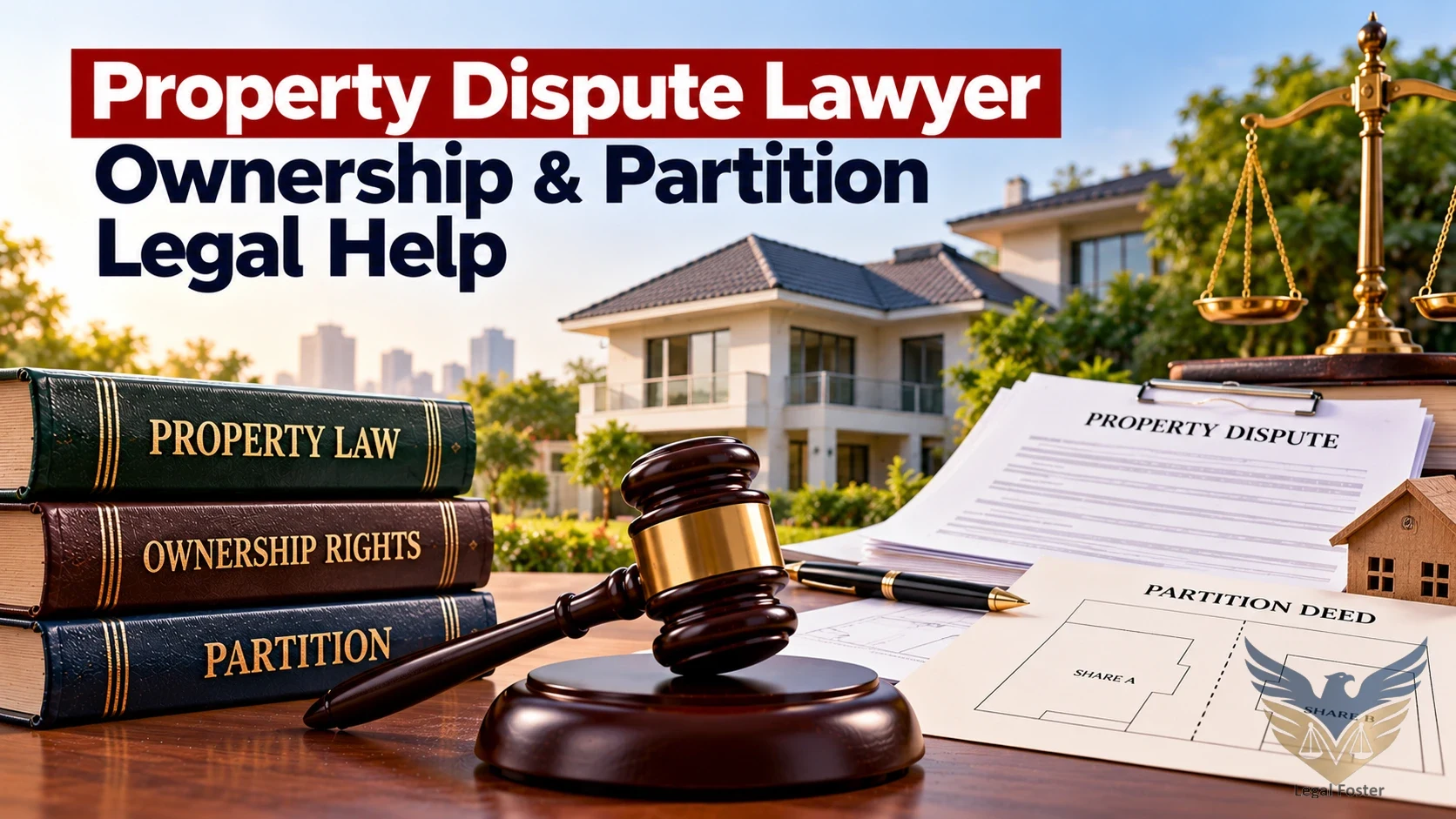
Property Dispute: What are the different types. A property dispute is where there is a conflict over a property. Whether it is a piece of land or a house, flat shop or commercial property. Someone could be fighting over who owns the property. Who has the right to stay in it or if a transaction was processed correctly. Someone could be trespassing on your property.
Some disputes you can avoid going to court. By either settling out of court amiably and getting all documents correct. While in some cases you might need to file suit or ask for another act's help.
Whatever your property dispute is you should know what type of case you're filing. Buying a property and someone cheated you is not the same as. An ancestral property dispute. As you may be filing a dispute against your landlord as a tenant.
There are some information that a property dispute lawyer will need from you. Who previously owned the property and what do you want from your case.
What Law Will Be Applicable in Property Disputes?
As discussed above there is no magical law which will help you in all the property related disputes. Depending on the deal, property, persons and what you want to accomplish you will have to refer to multiple laws.
Transfer of Property Act 1882
This act shall apply to most of the situations when you are selling your property, mortgaging your property, leasing out your property or gift your property. Keeping in mind all the conditions which are specified in the act are satisfied. Under section 54 of this act we shall discuss about sale of immovable property.
You will also have to see what type of transfer has been made, whether it is registered and what type of property has been dealt.
Specific Relief Act 1963
This act can be applied in numerous situations. Under section 5 we see how a person can claim specific immovable property, subject to the provisions of the code of civil procedure. Under section 6 you have a speedy remedy if a person is dispossessed from his property without his consent and not in due course of law. But you need to file a suit within 6 months. And this section will not entitle you like you would be entitled if you filed a suit for title.
You may also seek declaration or injunction if your facts satisfy the requirements. Beware of what you ask for.
Limitation Act 1963
Limitation will apply to certain suits. Based on what you want to claim and when did the cause of action arise. There are different periods of limitation for different types of suits. Such as suit for possession, suit for cancellation and so on.
Don’t assume that because you were negotiating or talking to your family members about your property or because the property exists you can file a claim over everything.
Code of Civil Procedure 1908
This act shall let you know how your suit should be proceeded. Unless there is any other law providing for a different procedure. Right from filing your suit to obtaining an injunction, producing documents, arguments and execution of decree.
There are many other laws which can be referred to and applied to your situation. Such as Registration Act 1908, Indian Succession Act 1925 or various personal laws relating to succession. Or RERA 2016 and various state acts concerning land.
So analyze your facts and see which law will be applicable to your scenario.
Who should approach a Property Dispute Lawyer?
Anytime you feel your property is at stake you can take legal advice. Here are some examples.
Family and Legal Heirs: If one of your family members is trying to claim the whole ancestral property or not allowing you to divide it. Or they are questioning your share in it.
Buyer and Seller: If your deal is stuck because of some discrepancy in documents. Non payment of money or fraud has been committed or any other reason why the contract cannot be performed.
Property Owner: If your is building on your property or blocking your way.
Buyer of flat or investment: If builder is not handing over the possession or there is any dispute between you and builder regarding the contract.
Tenant and Landlord: If you are in dispute with your landlord or tenant regarding possession or any other contractual right.
Business: If there is any doubt regarding your title or someone else is claiming ownership on your property which you bought or are looking to buy.
Advocate BK Singh can look at your papers and advise you if you have to go for civil remedies or you have to approach some other forum. Start with understanding your papers and what can happen immediately.
What will be the procedure to handle your Property Dispute?
There is no set procedure which will suits all property disputes. It all depends on what you want to claim. Are you claiming title, possession, want a division of property, done some deal which has gone wrong or you want to restrain someone from doing something.
Know your facts and title
First of all you will have to know how you came to possess the property. Who is in possession of the property currently and when did this issue arise. You will have to identify everyone who can have any interest in that property.
Your lawyer will also need to know if there is any case pending or any injunction on the property. Is the property mortgaged or has someone settled the property previously.
Go through your documents
Secondly go through all your documents. Registered documents, agreement, succession certificate, any document which can help you establish your claim. You will also have to check for any encumbrances on the property, its registration and any past orders passed.
Even if your documents look perfect there could be some flaw from the past which can affect your title. You will have to ensure that the person who sold you the property was actually able to sell it to you.
Send notice or negotiate
See if your dispute can be settled by sending a legal notice or negotiating with the other party. If it is a family matter you could always divide your property by entering into a partition deed. In case of a contractual dispute see what both parties were required to do according to the contract.
Make sure you get a proper settlement document which specifies what property is being settled for and what both parties have to do to conclude the deal. Avoid entering into an oral settlement.
See what you can claim
If you cannot settle your dispute amicably you can always litigate the matter. You can claim for declaration, partition, possession, specific performance or injunction based on the facts.
If you think that somebody is about to sell the property, build on the property or dispossess you of the property then you can ask the court for an interim order. The court can tell the other party not to dispose of the property until further orders. The court will analyse the law and facts and see if it wants to grant you that relief.
Follow through with your suit/complaint and comply with orders
Once you have filed a suit/complaint you will then have to reply to the other party’s claims. You will have to produce your documents, go to hearings and give evidence. There can be different procedures depending on which forum you have filed your claim and what you have asked for.
Advocate BK Singh can help you understand the procedure and what facts you can claim. We can help you identify the necessary documents and represent you in court. Once you have received a settlement or an order or a decree you need to know what it means.
Documents that should be ready
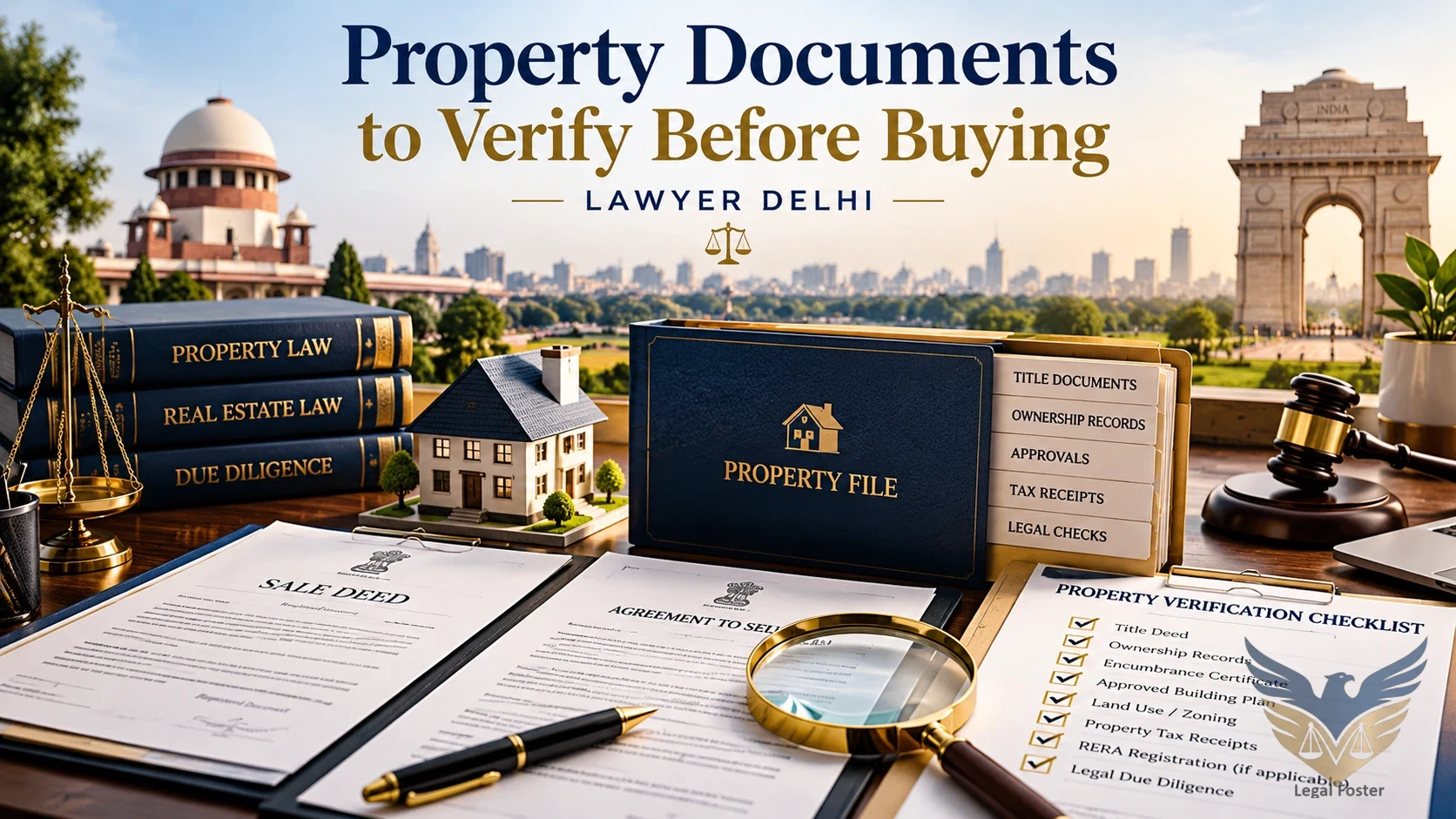
Having a proper file of property related documents will help you to understand the claim at hand and what documents are missing. This will help to avoid any further delay. All documents mentioned below may not apply to your case.
Title Documents
- Sale Deed/Gift Deed/Conveyance Deed which is registered
- Previous Title Deeds and chain of ownership (if any)
- Partition Deed/Release Deed/Settlement Deed (if any)
- Will/Succession Certificate/Legal Heir Certificate (if any)
Property Related Documents
- Mutation Entries/Revenue Records
- Property Tax Receipts/Municipal Records
- Layout Plans/Allotment Letter/Possession Letter (if any)
- Encumbrance Certificate/Registration Details (if any)
Purchase and Possession Related Documents
- Sale Agreement/Payment Receipts/Bank Statements
- Lease Deed/Licence Deed/Builder Buyer Agreement
- Electricity Bills/Possession Letters/Correspondence
- Any photographs/chats which can prove your case
Notices and Proceedings
- Legal Notices and Reply (if any)
- Pleadings filed in Court and Order passed (if any)
- Survey Report/Boundary Wall (if any)
- Settlement Deed and Correspondence (if any)
Make sure to keep the original documents with yourself and provide copies for a preliminary review. Originals may be asked for later through due course. Do not tamper with any documents and only provide screenshots if the actual document cannot be provided.
When to approach a Property Dispute Lawyer?
If you have received a Notice or Summons from Court or if you come to know that there is another Sale Deed in circulation or if someone is trying to transfer the property which is under dispute or if you are being dispossessed you should consult a lawyer immediately.
You should also consult a lawyer if you are buying a property and the title is doubtful or you are entering into a Family Settlement or if the Builder is not fulfilling certain obligations.
If you have already approached the Court and have received an adverse order or your matter is coming up for hearing or you are unable to reach a consensus on how to execute a settlement you should consult a lawyer. Make sure to carry all your case papers with you and not just rely on your memory.
Advocate BK Singh can look into your documents and advise you on what options are available to you and what you would need to do. Always try to understand your situation before taking any action.
What can Advocate BK Singh do for you?
The first step in providing legal services related to property is to understand your claim and go through the documents you have. Depending on the situation you may require legal opinion, document scrutiny, drafting of notice, advice regarding settlement or representation in appropriate proceedings.
You can read more about Advocate BK Singh and the legal services he provides on his website.
Some things that can be done for you are as follows:
- Go through your title documents, agreements and chain of ownership.
- Look into disputes related to possession, inheritance, partition or breach of contract.
- See if you can get a decree of declaration/injunction/possession etc.
- Scrutinise existing notices/pleadings/orders passed by the Court and advise you on next steps.
- Understand what you can get from the Court and what is realistic.
If you are located in Delhi NCR i.e Delhi, Noida, Greater Noida, Ghaziabad or Gurugram we will have to see where the property is located and which court has jurisdiction over the matter. If the property is located in another state then we will have to see what laws are applicable and which forum you can approach.
Just knowing the property address will not help us determine what you can do. We will have to see your documents, who are the parties involved, what happened and what you want to achieve.
Frequently Asked Questions
Q1.How can a property dispute lawyer help me?
Ans. They will read your documents, see what claims are made against you and what remedies are available to you. It can range from sending notices, settling a matter out of court, filing for partition, injunctions or taking possession / civil litigation etc. You can meet Advocate BK Singh to get your documents assessed and know your options.
Q2.How do I prove I own a property?
Ans. You prove you own a property by producing the documents which state you are the owner of the property and how did you come to own it. Sometimes other documents and evidence can help you prove your ownership of the property. Whether a registered deed helps or not will depend on what kind of transaction took place and what rights your transferor had in the property. Mutation entries and property tax receipts do not always help prove ownership.
Q3.My relative does not want to give me my share in ancestral property. Can I file a case against him?
Ans. If you have a share in the property you can possibly file for partition to claim your share. Whether you will get a share of the property or not will depend on what property it is, what laws apply to your situation, whether any previous transfer took place or if there was any partition/relinquishment done. A lawyer will have to look at all these factors before advising you on the appropriate remedy.
Q4.Can I stop someone from selling my property if it is in dispute?
Ans. If your situation falls into the categories where a court will grant you an interim injunction, then you may be able to. The mere fact there is a dispute does not stop everyone from selling the property. If you know there is a property about to be sold immediately connect with a lawyer.
Q5.How long will it take for my property dispute to be resolved?
Ans. It depends on factors such as the complexity of your title dispute, how many parties are involved, what sort of documents/evidence you need to produce and obtain. Court timings also affect the speed at which your case will be resolved along with any interim applications or appeals. Some cases take shorter to resolve than others.
Q6.If I have a registered sale deed, can I prove I own the property?
Ans. Maybe, it depends on the circumstances. A sale deed is generally a good document that helps prove you have title over a property. But there could be more to it. You would have to look at what rights your transferor had over the property and if previous owners had good title. Also whether all legal formalities were finished.
Q7.Someone is occupying my property. Can I file a case to get my property back?
Ans. Yes you can file a case to get your property back. If you can prove you are entitled to that property there are multiple remedies to recover it. If your possession was taken from you and you fall under section 6 of specific relief act 1963 you will have to be wary of the 6 month time limit.
Q8.Someone has filed documents with the sub registrar office forging documents to claim my property. What can I do?
Ans. There is not much you can do when people forge documents. Get all the documents you can related to your property. Try to get copies of the registration that took place. Consult a lawyer and see what options you have. You may have to file a civil suit as well as look at criminal remedies.
Q9.Is it possible to settle my property dispute outside of court?
Ans. Yes. You can negotiate with the opposite party or agree on a settlement. Just make sure that the agreement you reach is legal and you finish all the formalities. If there is already a pending case you may have to have your settlement recorded in court as well.
Q10.How can I get Advocate BK Singh to assess my property dispute?
Ans. Gather all the documents related to your property. Any agreements, notices sent or received, emails or letters, court orders if you’ve already filed a case etc. Once you have all your information we at Advocate BK Singh can assess your issue and inform you of your property dispute and what you can do about it.
Conclusion
Resolve any property dispute needs time and proper documentation. You must understand what right you have on that property. Maybe it's your ancestral property or someone sold you that property but there some dispute on it. Or may be builder buyer dispute or someone is trying to snatch your land. Whatever the case may be, you need to understand the facts regarding it and what remedies are available to you.
If you delay too much in consulting a lawyer you may lose certain options. There may be a limitation period or you may have to file an urgent suit in case someone is trying to encroach your property. But if you run to a lawyer immediately and file a lawsuit without understanding the history of title and what remedies you require you may end up losing money.
If you have any property dispute in Delhi NCR or India you can reach out to Advocate BK Singh. He will help you understand your documents and what you can do next.
Author Bio
Advocate BK Singh specializes in disputes related to properties and civil suits. He guides individuals by understanding their property papers and explains to clients all the possible legal actions that they can take. There can be various scenarios which lead an individual to seek lawyer consultation for property. Property can be related to their ancestral property, division of property, someone selling a property to them, builder buyer dispute, property title or someone trying to grab their property by encroaching on it. All these situations have to be studied well and understood before proceeding to any sort of legal action against them. If you require assistance or have any query regarding your property, feel free to contact Advocate BK Singh. Subject to timing.